
Aero the Acro-Bat 2 Gameplay
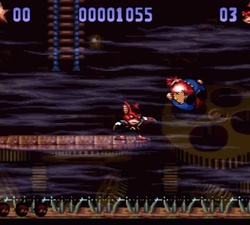
The first thing you feel in Aero the Acro-Bat II is the springy boom of a trampoline under your paws and how easily a bat snags the trapeze. A couple swings, let go—and there it is, that familiar corkscrew: a diagonal burst through the air like you’ve been shot from a circus cannon. Here the rhythm isn’t a timer—it’s you: how cleanly you hit the window, string a jump, a dive, and a feather-soft landing on a skinny ledge without sloshing away your stash of stars. This is a platformer where every movement is a little stunt, and each stage is an attraction stitched from barrels, springs, ropes, wheels, and nasty surprises.
The rhythm of flight and drills
Aero the Acro-Bat II’s controls are fair and demanding. A jump is like stepping onto a tightrope: miss by a fraction and you’re sailing past. The attack is a signature diagonal drill—a sharp dive that lets you spear an enemy, ricochet, and keep gliding. Lean forward for a lower angle; tip up to snag higher platforms. That’s the heart of combat: never rooted to the floor, but dancing over the void, clipping foes and touching down where the next maneuver can begin. Stars aren’t just pickups—they’re ranged throws. You treat them like ammo, saving a tucked-away plan B for tight corridors.
The sweetest part is when a combo clicks. A spring pops you up, the drill punches through a clockwork clown, you bounce, and you’re already sailing toward a rope. You can feel the momentum, know exactly how much to feather the button to settle onto a carousel platform. This isn’t “learn once and coast”—it’s about each attempt: constantly re-tuning height and arc, syncing to the set-piece tempo, catching the level’s beat. The bolder you are in the air, the easier those clean runs with no wasted lives.
Puzzle routes and carnival rides
Aero the Acro-Bat II rearranges its set pieces so you don’t just beeline to the goal—you figure out how to open the way. A lever on one side, a locked door on the other; somewhere between them a spring-loaded block that briefly reconfigures the room. It’s not “find a key for a chest”—it’s bite-sized environmental puzzles. You learn to read a stage: inverted stairways, tubes you can slide through, cannons that arc you across gaps. There’s no hourglass breathing down your neck, which makes secret hunting addictive—you spot a suspicious wall and realize a trampoline and double bounce chain threads right into it.
Checkpoints are placed with a wink: not so frequent you switch off, not so scarce you’re booted back to square one on every slip. When you fall, Continue doesn’t scold—it nudges you: try again, you know where the juicier spring sits and which trapeze reaches farther. Passwords save long sessions: memorize a code and you’ll jump back into the right world without breaking flow. It’s a dialed-in balance for 100% hunters, sniffing out hidden rooms, invisible platforms, and tidy pockets of stars and hearts the game loves to stash in plain sight.
The arenas are as varied as a great circus tour. One moment you’re riding roller-coaster rails, timing clean hops through spiked wheels; the next, a room flips its logic—platforms vanish when you look at them and reappear when you turn away. Then comes a water run with pipes where your drill becomes cautious nudges, and enemies act like traps, waiting out your mistake. Each world riffs on a theme—from fairground glow to gloomy backdrops—and each carries its own rapid-fire tongue twister of hazards.
Duels and reflex checks
Bosses are the set-piece finales. Huge mechanical jaws, crushing wheels trying to pin you in a corner, phantom clowns blinking in behind your back. Here the drill isn’t just damage—it’s your positioning tool: strike, bounce to safety, slip behind scenery, climb back for another pass. Fights live on tempo and attack patterns. A couple cycles in and you’re calling the beats—when to jump, when to flick a star, and how to squeeze through the gap between phases. These bouts are honest: punished for greed? That’s on you. Which is why a clean, no-hit finish feels so good—like threading a tightrope under the arena spotlights.
The difficulty ramps smoothly. The first third teaches you to craft strings and read the terrain; then the real reflex exam starts. Where one hop used to work, now you need three: trampoline, rebound, drill into a narrow slit. Eventually you hit sections where any hesitation means spikes, and you’re keeping the stage’s pulse like a metronome: one—jump, two—drill, three—star on target. That’s the flow state that keeps you coming back to Aero the Acro-Bat II—on the original Super Nintendo cart or years later, when you boot it up and muscle memory takes the controls.
This isn’t cold tech—this is stagecraft. You’re the performer handed the floor: hang from the trapeze, drop into the limelight, stick the trick, and take the game’s applause in the bright chime of scooped-up stars. When someone asks “how do you get past that cursed bit?”, the answer isn’t a secret cheat—it’s timing: catch the beat, use a wall like a spring, don’t burn ammo early, and listen to the level—it talks. That sense of circus and attractions is what makes Aero the Acro-Bat II feel alive: it’s less about the win and more about the air under your wings, when you’re flying and you just know the landing will be perfect.